



Integumentary System (Skin)
The integumentary system is the body’s outermost protective barrier, primarily composed of the skin, hair, nails, and associated glands. It plays a crucial role in protecting the body from environmental damage, regulating temperature, and facilitating sensory perception. Among its components, the skin is the most extensive organ and serves as the first line of defense against microbial invasion, dehydration, and mechanical injuries.
Structure of the Skin
The skin is composed of three primary layers, each with distinct structural and functional properties. These layers are the epidermis, dermis, and hypodermis (subcutaneous tissue). Each layer consists of specialized cells and structures that contribute to the overall integrity, function, and protection of the body.
1. Epidermis: The epidermis is the outermost layer of the skin and is primarily composed of stratified squamous epithelial cells. It is avascular, meaning it lacks blood vessels, and relies on diffusion from the underlying dermis for nutrient and oxygen supply. The epidermis is primarily responsible for creating a protective barrier against external insults, preventing water loss, and contributing to immune defense.

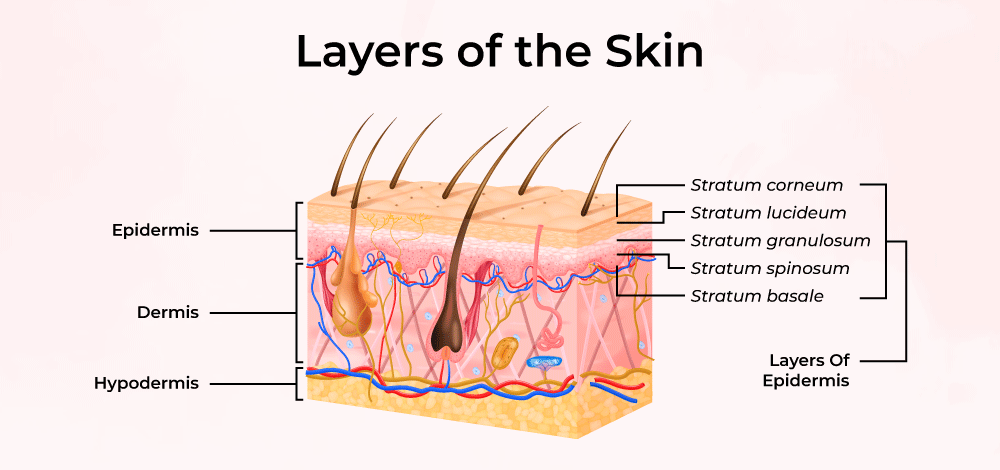
The epidermis consists of five distinct layers (strata) in thick skin (such as on the palms and soles) and four layers in thin skin (found on most of the body):
- Stratum basale (germinativum): The deepest layer of the epidermis, consisting of a single row of basal cells. These cells continuously undergo mitosis to produce new keratinocytes, which gradually migrate towards the surface. This layer also contains melanocytes (which produce the pigment melanin), Merkel cells (involved in touch sensation), and Langerhans cells (immune cells that detect pathogens).
- Stratum spinosum: Sometimes called the “prickle cell layer,” this layer consists of several layers of keratinocytes that are bound together by desmosomes. These desmosomal connections give the cells a spiny appearance under a microscope. This layer provides mechanical strength to the epidermis and plays a role in immune response.
- Stratum granulosum: This layer contains keratinocytes that begin to undergo keratinization, a process where cells become filled with keratin and lose their nuclei. This layer is rich in keratohyalin granules, which help in waterproofing the skin and creating a strong barrier.
- Stratum lucidum: This layer is only present in thick skin and consists of dead, flattened keratinocytes that are densely packed with eleidin, a precursor to keratin that provides additional protection and transparency.
- Stratum corneum: The outermost layer of the epidermis, composed of flattened, dead keratinized cells that form a tough, protective layer. These cells are continuously shed and replaced through desquamation. The stratum corneum prevents water loss, protects against physical and microbial damage, and acts as a crucial barrier between the body and the external environment.
2. Dermis: The dermis lies beneath the epidermis and is a highly vascularized connective tissue layer. It provides structural support to the skin, houses sensory receptors, and contains various appendages such as hair follicles, sebaceous glands, and sweat glands. The dermis is much thicker than the epidermis and consists of two distinct layers:
- Papillary layer: This is the uppermost portion of the dermis and consists of loose connective tissue rich in capillaries, fibroblasts, and immune cells. The papillary layer forms finger-like projections called dermal papillae, which interdigitate with the epidermis, strengthening the connection between the two layers. These projections are particularly prominent in thick skin, forming unique fingerprints. The papillary layer also contains Meissner’s corpuscles, specialized nerve endings responsible for detecting light touch.
- Reticular layer: This deeper layer is composed of dense irregular connective tissue that provides tensile strength and elasticity to the skin. It contains collagen and elastin fibers, which maintain skin firmness and flexibility. The reticular layer houses important structures such as blood vessels, lymphatic vessels, hair follicles, sebaceous (oil) glands, sweat glands, and deep pressure receptors like Pacinian corpuscles.
3. Hypodermis (Subcutaneous Tissue): The hypodermis, also known as the subcutaneous layer, is the deepest layer of the skin, located beneath the dermis. It is composed mainly of adipose (fat) tissue and loose connective tissue, which provide insulation, cushioning, and energy storage. The hypodermis serves as an anchor, attaching the skin to underlying muscles and bones while also playing a role in thermoregulation by retaining body heat.
Blood vessels and lymphatic vessels within the hypodermis supply the upper skin layers with nutrients and assist in waste removal. Additionally, this layer contains Pacinian corpuscles, which are specialized sensory receptors that detect deep pressure and vibration.
Functions of the Skin
The skin performs a wide range of essential functions that contribute to homeostasis and overall well-being:
- Protection: Acts as a physical barrier against mechanical injury, pathogens, UV radiation, and harmful chemicals.
- Thermoregulation: Regulates body temperature through sweat production, vasodilation, and vasoconstriction.
- Sensation: Houses sensory receptors for detecting touch, pain, temperature, and pressure.
- Excretion: Eliminates waste products through sweat, including salts, urea, and toxins.
- Vitamin D Synthesis: Produces vitamin D when exposed to UVB sunlight, which is essential for calcium absorption and bone health.
- Water Balance: Prevents excessive water loss through the epidermal barrier while maintaining hydration.
- Immune Defense: Contains immune cells like Langerhans cells that detect and respond to foreign invaders.
Common Skin Disorders
Several disorders can affect the skin, leading to various health concerns:
- Acne: Inflammation of sebaceous glands, leading to pimples and cysts.
- Eczema: Chronic inflammatory condition causing itching, redness, and dry skin.
- Psoriasis: Autoimmune disorder characterized by rapid skin cell turnover, leading to scaly plaques.
- Skin Cancer: Uncontrolled growth of abnormal skin cells, including melanoma, basal cell carcinoma, and squamous cell carcinoma.
- Dermatitis: Inflammation caused by allergic reactions, irritants, or infections.
The skin, as the largest organ of the body, plays a vital role in protecting internal structures, regulating temperature, and sensing environmental stimuli. Its complex structure, consisting of the epidermis, dermis, and hypodermis, allows it to perform multiple essential functions efficiently. Understanding the integumentary system is crucial for maintaining skin health, preventing diseases, and appreciating its significance in overall well-being.
Visit to: Pharmacareerinsider.com