

Cicada covid variant BA 3.2: As the world continues to adapt to life alongside COVID-19, the emergence of new variants remains an expected part of the virus’s natural evolution. Caused by the SARS-CoV-2, COVID-19 has demonstrated a consistent ability to mutate over time, giving rise to multiple variants with differing levels of transmissibility, immune escape, and clinical impact.
One such variant now drawing attention is BA.3.2, an offshoot of the broader Omicron variant lineage. Informally referred to as the “Cicada” variant—a nickname likely stemming from its periodic emergence rather than any scientific classification—it has sparked curiosity among researchers and the public alike. While not yet classified as a major variant of concern, its appearance highlights the ongoing need for vigilance and surveillance.
For a U.S. audience—and globally—the critical question is not just what this variant is, but whether it meaningfully changes the current public health landscape. Specifically:
- Does BA.3.2 spread more easily than previous variants?
- Can it evade immunity from vaccines or prior infections?
- Does it cause more severe disease?
- Will it impact current guidelines or daily routines?
So far, most emerging subvariants, including BA.3.2, are being closely monitored by organizations such as the Centers for Disease Control and Prevention and the World Health Organization. These agencies analyze real-world data on transmission, hospitalization rates, and vaccine effectiveness to determine whether any changes in public health recommendations are necessary.
Importantly, the evolution of SARS-CoV-2 does not always translate into increased danger. Many variants show incremental changes rather than dramatic shifts in severity. In many regions, widespread immunity—built through vaccination campaigns and prior infections—continues to provide strong protection against severe illness, hospitalization, and death.
In this context, BA.3.2 should be viewed as part of the ongoing evolutionary pattern of the virus, rather than an immediate cause for alarm. However, understanding its characteristics helps individuals and healthcare professionals make informed decisions.
In the following sections, we will examine BA.3.2 in detail—covering its origin, mutations, transmissibility, vaccine effectiveness, symptoms, and what (if anything) it means for public health and daily life.
What Is the BA.3.2 “Cicada” Variant?
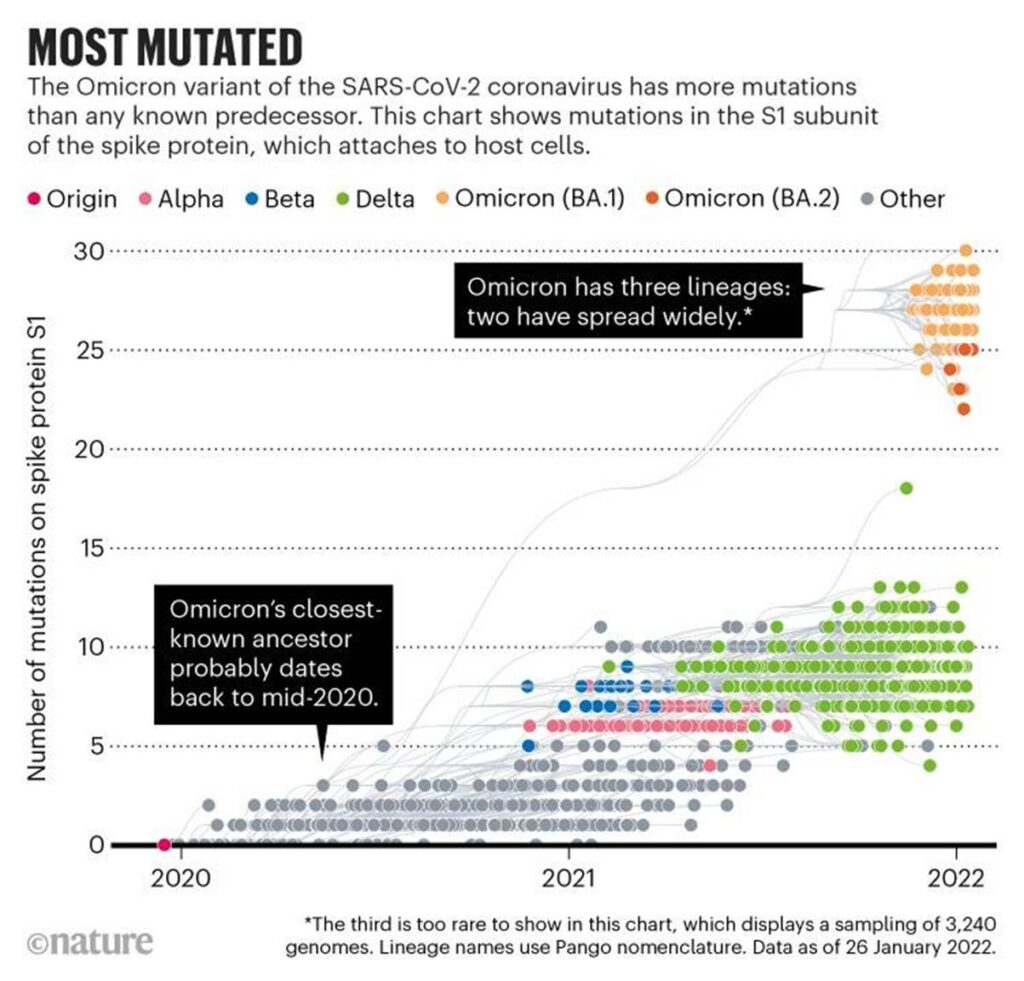
The BA.3.2 variant, sometimes informally referred to as the “Cicada” variant, is part of the evolving family of the SARS-CoV-2 that causes COVID-19. It belongs to the broader Omicron variant lineage—the same group of variants responsible for the majority of global COVID-19 waves since late 2021.

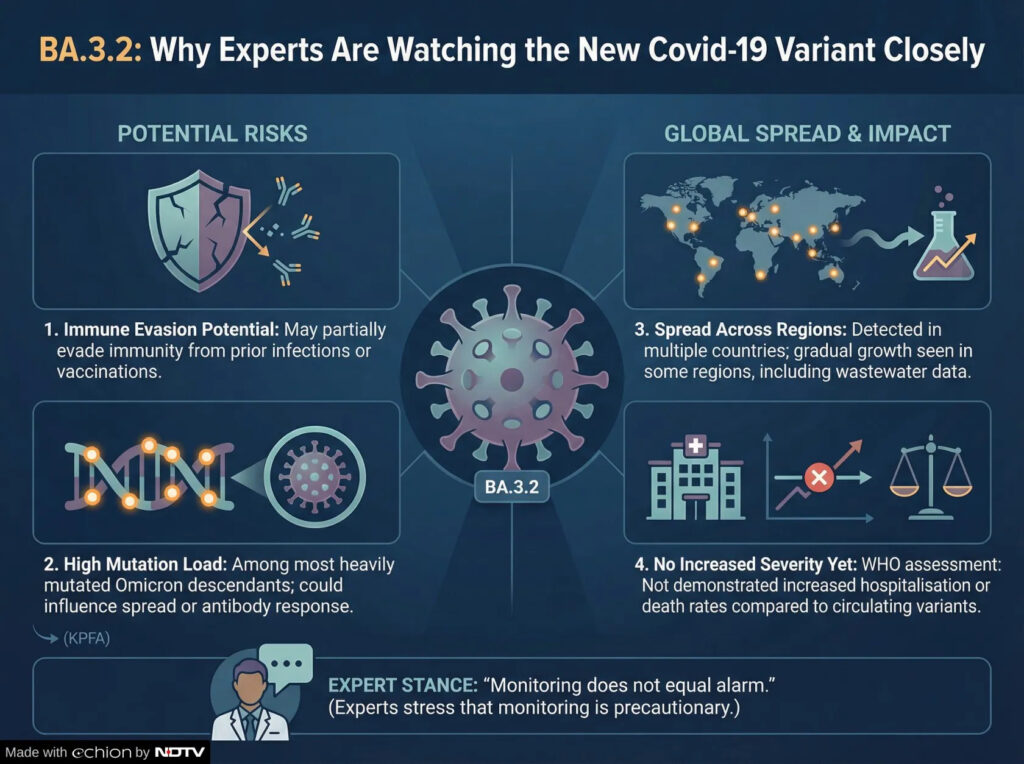
Where BA.3.2 Fits in the Variant Family
To understand BA.3.2, it helps to see it as part of a “family tree” of viral evolution:
- Omicron (parent lineage) → Highly transmissible variant with multiple mutations
- BA.3 (sublineage) → One of several Omicron branches
- BA.3.2 (subvariant) → A further evolution of BA.3 with additional mutations
This stepwise mutation process is completely normal for RNA viruses like SARS-CoV-2. Each new subvariant represents small genetic changes, not a completely new virus.
Key Characteristics
- Subvariant of BA.3: It inherits most of its features from earlier Omicron strains
- Detected around 2024: Initially identified through genomic surveillance
- Renewed attention (2025–2026): Likely due to reappearance or slight increases in cases
- Nickname “Cicada”: Reflects its pattern of re-emergence after periods of low visibility
Why It Matters
BA.3.2 is best understood as an “updated version” of Omicron, rather than a fundamentally new threat. Its mutations may:
- Slightly alter transmissibility
- Influence immune escape to some degree
- Affect how it spreads within populations
However, such changes are typically incremental, not dramatic.
Simple Analogy
Think of BA.3.2 like a software update rather than a brand-new program.
It runs on the same system (Omicron) but includes small tweaks that may slightly change performance—not a complete overhaul.
Bottom Line
At this stage, BA.3.2 represents a continuation of the natural evolution of SARS-CoV-2, not a sudden shift in the pandemic. Ongoing monitoring by global health agencies ensures that any meaningful changes in behavior—such as increased severity or vaccine resistance—are quickly identified and addressed.

How Severe Is the BA.3.2 “Cicada” Variant?
Current global observations suggest that the BA.3.2 (“Cicada”) variant behaves very similarly to earlier strains within the Omicron variant family of the SARS-CoV-2.
What the Data Suggests
- Comparable severity: Illness caused by BA.3.2 appears similar to other Omicron subvariants, not more aggressive
- Mostly mild to moderate cases: The majority of infections result in upper respiratory symptoms, fatigue, and recovery at home
- No major spike in hospitalizations: So far, there is no strong evidence of a dramatic increase in severe cases or healthcare burden
Role of Immunity
One of the key reasons severity remains relatively low is widespread immunity from:
- Vaccination
- Previous infection
- Or a combination of both, known as hybrid immunity
In countries like the United States, a large proportion of the population has this layered protection. This helps:
- Reduce disease severity
- Lower hospitalization rates
- Prevent complications
Who Should Still Be Cautious?
Even if the overall risk is stable, certain groups remain vulnerable:
- Older adults
- People with weakened immune systems
- Individuals with chronic diseases (e.g., diabetes, heart disease)
For these populations, even Omicron-like variants can still lead to serious outcomes.
Big Picture
👉 BA.3.2 does not currently appear more dangerous than previous Omicron variants.
👉 Existing immunity continues to provide strong protection against severe disease.
Bottom Line
While BA.3.2 is worth monitoring, there is no indication of a major shift in severity. For most people—especially those vaccinated—the risk profile remains reassuringly similar to recent COVID-19 waves, rather than a return to earlier, more severe phases of the pandemic.
Symptoms largely mirror earlier Omicron waves:
Common symptoms:
- Sore throat (often reported as more noticeable)
- Runny nose / nasal congestion
- Fatigue and body aches
- Mild fever
- Cough
- Headache
Less common:
- Loss of taste or smell
For most Americans, it may feel similar to a cold or mild flu, making testing important for confirmation.
US What Does This Mean for the United States?
1. Public Health Impact
At present, BA.3.2 is not classified as a major variant of concern but is being monitored. That means:
- No immediate large-scale restrictions expected
- Surveillance systems are tracking spread
2. Vaccines Still Matter
Even with mutations:
- Vaccines continue to protect strongly against severe illness and hospitalization
- Booster doses may improve protection, especially for:
- Older adults
- Immunocompromised individuals
3. Healthcare System Preparedness
The U.S. healthcare system is now better equipped due to:
- Prior exposure waves
- Antiviral treatments (e.g., Paxlovid)
- Improved clinical protocols
Should Americans Be Concerned?
Yes—but in a measured way
Reasons to stay alert:
- Increased transmissibility potential
- Reinfection possibility
- Seasonal surges (especially fall/winter)
Reasons not to panic:
- No strong evidence of increased severity
- Existing immunity provides protection
- Tools (vaccines, treatments, testing) are available
Practical Prevention Tips (Still Relevant in 2026)
- Stay updated on booster recommendations
- Test if symptomatic (especially before gatherings)
- Improve indoor ventilation
- Wear masks in high-risk settings (if needed)
- Protect vulnerable individuals
Final Takeaway
The BA.3.2 “Cicada” variant is a reminder that COVID-19 hasn’t disappeared—it has simply evolved into a manageable endemic threat.
For the U.S. population, the situation is best summarized as:
👉 Stay informed, stay prepared, but don’t panic.
The combination of vaccines, prior immunity, and medical advancements means that—even with new variants—we are far better equipped than in earlier phases of the pandemic.BA.3.2 “Cicada” COVID Variant: What the U.S. Needs to Know Right Now