


Introduction to Causality assessment
Causality assessment is a critical process in pharmacovigilance aimed at determining whether a specific drug is responsible for an observed adverse drug reaction (ADR). It helps in identifying the strength of the relationship between drug exposure and the adverse event. Causality assessment is complex, as multiple factors like the patient’s condition, co-administered drugs, or underlying diseases can contribute to the event. The primary goal of causality assessment is to ensure accurate drug safety monitoring and informed decision-making in clinical practice and regulatory affairs.

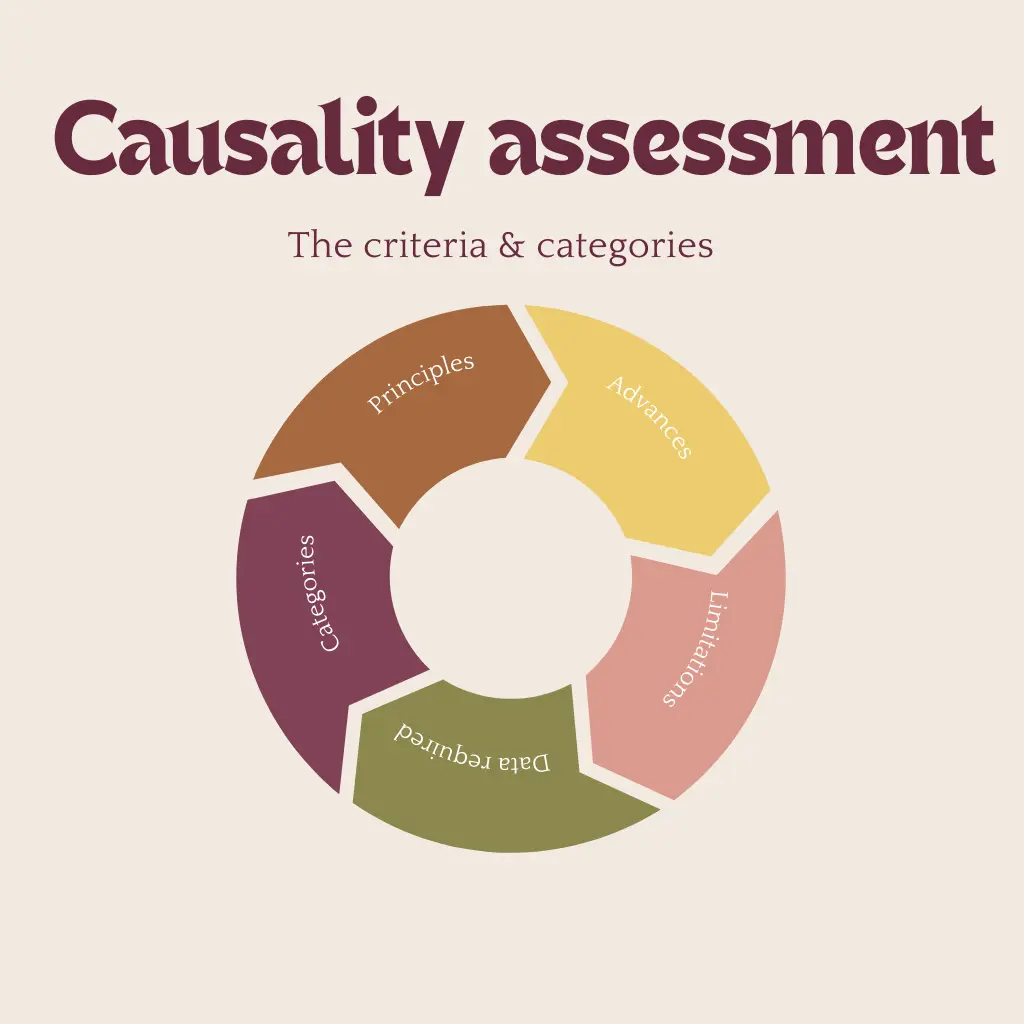
Several established methods are used to assess causality, including both qualitative and quantitative approaches. Each method has strengths and limitations, depending on the clinical context and available data.
WHO-UMC (World Health Organization-Uppsala Monitoring Centre) Causality Assessment System
The WHO-UMC Causality Assessment System is a globally recognized framework used to determine the likelihood that a drug caused an adverse drug reaction (ADR). It is an essential tool in pharmacovigilance, helping regulatory agencies, healthcare professionals, and pharmaceutical companies assess and monitor drug safety.
Causality Categories and Criteria
1. Certain: A reaction is classified as “Certain” when there is strong evidence linking the adverse event to the drug, with no other plausible explanations.
Criteria:
- A plausible time relationship between drug intake and ADR.
- The reaction cannot be explained by another disease or drug.
- A positive dechallenge (improvement after stopping the drug).
- A positive rechallenge (reaction reoccurs upon re-administration, if ethically permissible).
Example: A patient taking penicillin develops anaphylaxis (severe allergic reaction).
- Symptoms appear within minutes of administration.
- Symptoms resolve after stopping the drug.
- The patient had a previous documented allergic reaction to penicillin.
- No other drugs or conditions explain the reaction.
✅ Causality: Certain
2. Probable / Likely: A reaction is classified as “Probable/Likely” when the drug is the most likely cause, but rechallenge is not necessary.
Criteria:
- A reasonable time relationship to drug intake.
- The reaction is unlikely to be explained by another disease or drug.
- A positive dechallenge (improvement after stopping the drug).
- Rechallenge is not required.
Example: A patient taking ibuprofen for pain relief develops gastric ulcers after a few weeks.
- Ulcer symptoms improve after stopping ibuprofen.
- The patient had no prior history of ulcers.
- No other medications or medical conditions explain the ulcer.
✅ Causality: Probable/Likely
3. Possible: A reaction is classified as “Possible” when a drug-related cause cannot be ruled out, but there are alternative explanations.
Criteria:
- A reasonable time relationship to drug intake.
- Could also be explained by another disease or drug.
- Information on drug withdrawal is unclear or lacking.
Example: A patient on metformin develops nausea and vomiting.
- Symptoms start after metformin use.
- The patient also has gastroenteritis (infection causing nausea and vomiting).
- Symptoms improve, but it is unclear if stopping metformin helped.
✅ Causality: Possible
4. Unlikely: A reaction is classified as “Unlikely” when there is little evidence to support a causal relationship.
Criteria:
- An inconsistent time relationship with drug intake.
- A more likely alternative explanation exists.
Example: A patient on paracetamol (acetaminophen) develops a skin rash two weeks after stopping the drug.
- The time gap is too long to be linked to paracetamol.
- The patient had started another new drug recently.
- A more probable cause (e.g., an allergy to the new drug) exists.
✅ Causality: Unlikely
5. Conditional / Unclassified: A reaction is classified as “Conditional/Unclassified” when there is some evidence, but additional data is required before making a conclusion.
Criteria:
- More data is needed to confirm or reject a causal relationship.
Example: A patient taking a new experimental drug in a clinical trial develops severe headaches.
- The drug has not been studied extensively for this effect.
- No other causes are identified, but more research is needed.
✅ Causality: Conditional/Unclassified
6. Unassessable / Unclassifiable: A reaction is classified as “Unassessable/Unclassifiable” when the available information is insufficient or contradictory.
Criteria:
- Incomplete or inconclusive medical records.
- Conflicting evidence makes assessment impossible.
Example: A patient on multiple medications reports fatigue but does not provide details about dosage or duration.
- No clear pattern is found.
- Other conditions could explain the fatigue.
- Insufficient data to assess causality.
✅ Causality: Unassessable/Unclassifiable
Importance of WHO-UMC Causality Assessment in Pharmacovigilance
Standardization: Ensures a uniform approach for evaluating ADRs globally.
Decision Making: Helps regulatory bodies assess drug safety.
Signal Detection: Identifies emerging safety concerns about drugs.
Patient Safety: Assists healthcare professionals in optimizing medication use.
Strengths:
- Simple and easy to use.
- Provides clear categories for classification.
- Widely accepted and used globally by regulatory bodies.
Limitations:
- Subjective, as it relies on clinical judgment.
- Does not incorporate a quantitative probability score.
Visit to: Pharmacareerinsider.com