


Acid production in the stomach is a vital physiological process that plays a crucial role in digestion, protection against pathogens, and nutrient absorption. The stomach produces hydrochloric acid (HCl) in response to various stimuli, including the presence of food, gastrin hormone release, and neural signals.

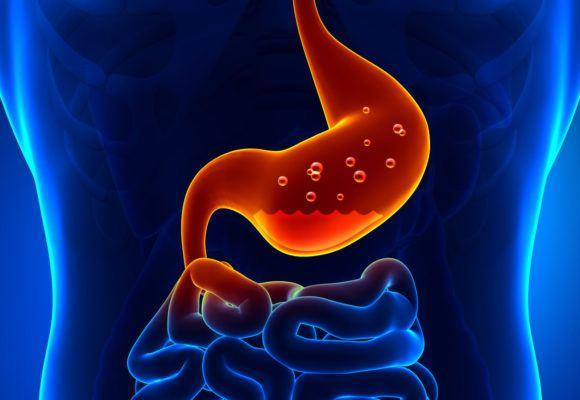
The regulation of acid secretion in the stomach occurs through neuronal and hormonal mechanisms.
1. Neuronal Regulation
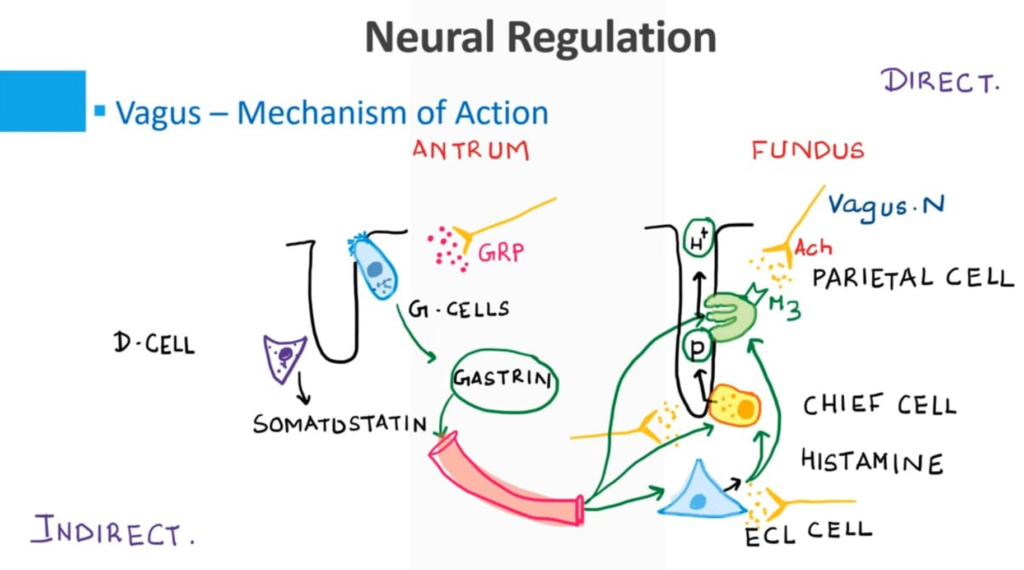
The vagus nerve (cranial nerve X) plays a key role in stimulating acid secretion through two pathways:
A. Direct Pathway: The vagus nerve directly stimulates parietal cells via acetylcholine (ACh), which binds to M3 receptors, leading to the activation of the proton pump (H⁺/K⁺ ATPase) and increased acid secretion.
B. Indirect Pathway: The vagus nerve stimulates G cells to release gastrin and ECL (enterochromaffin-like) cells to release histamine, both of which enhance acid secretion by acting on parietal cells.

2. Hormonal Regulation
- Gastrin (secreted by G cells) binds to CCK₂ receptors on parietal cells, stimulating acid production.
- Histamine (from ECL cells) binds to H₂ receptors on parietal cells, enhancing acid secretion.
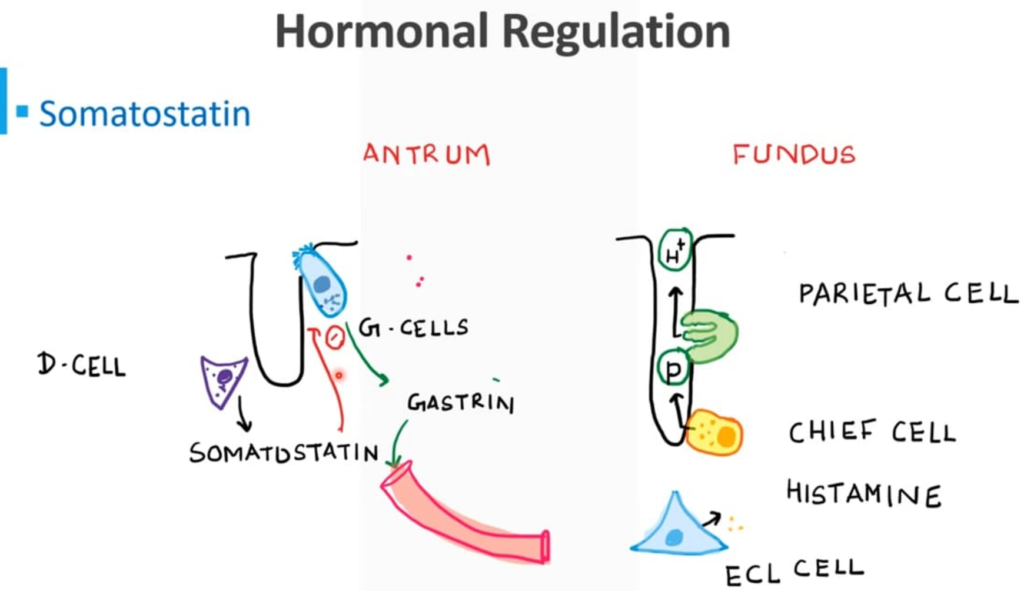
- Somatostatin (from D cells) inhibits acid secretion by suppressing gastrin and histamine release.

These mechanisms work together to maintain acid levels in the stomach for digestion while preventing excessive acidity.
1. NEURAL REGULATION
A] Direct Action
- Stimulation of the vagus nerve causes a release of the neurotransmitter acetylcholine (Ach).
- Ach acts via muscarinic receptors {M3} on the parietal cell to increase gastric secretion.
- Now the parietal cell secretes H+ ion, and in response to the H+ ions chief cells start to secrete pepsinogen.
- When the pepsinogen is secreted the ECL (enterochromaffin-like cells) starts the secretion of Histamine.
- This histamine further acts on the parietal cell and chief cell to stimulate them to secrete H+ ions and pepsinogen.
B] Indirect Action
- Stimulation of the vagus nerve causes a release of the GRP (Gastrin Releasing Peptide).
- GRP acts on the G-cells and stimulates them to secrete gastrin hormone, the gastrin hormone enters into the systemic circulation and reaches the parietal cell, chief cell, and ECL cells and stimulates to increase of respective chemicals.
- D-cells are also present in the stomach, they secret somatostatin.
Hormonal regulation
Gastrin (endocrine regulation)
G-cells are located at the pylorus of the stomach. These cells secrete the hormone gastrin.
Gastrin is carried via the bloodstream to the parietal cells. It stimulates gastric secretion.
Histamine (paracrine regulation)
Enterochromaffin-like cells (ECL) are located within the stomach wall. These cells secrete histamine. Histamine then reaches the parietal cells. Acting via H2 receptors it stimulates gastric secretion.